
Fully Automated Filling Lines vs. Semi-Automatic Filling Machines
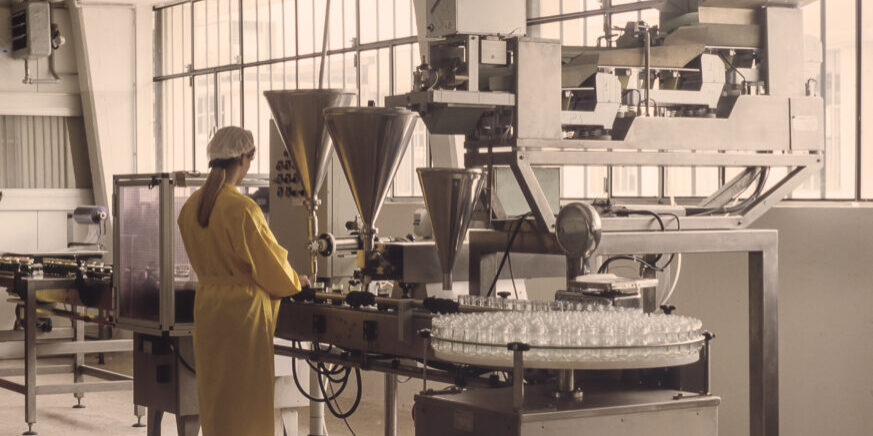
When your business reaches the point where manual filling is no longer enough, the next big decision is usually semi-automatic machine or fully automated filling line. That choice affects everything: your output, labor costs, product consistency, future expansion—and of course, your budget.
For beverage producers, food and sauce manufacturers, chemical companies, and cosmetics brands, understanding the real differences between fully automated filling lines and semi-automatic filling machines is crucial for smart investment. Go too big, and you may tie up cash in capacity you can’t use. Stay too small, and your production becomes the bottleneck that chokes growth.
This article breaks down how each option works, their pros and cons, total cost of ownership, and how to decide which is right for your stage of development. At the end, you’ll also find a recommendation for Micet equipment as a strong partner for both semi-automatic and fully automated systems.
What Is a Semi-Automatic Filling Machine?
A semi-automatic filling machine assists your operators but still requires human intervention at several steps. Typically, semi-auto machines:
- Require operators to manually place containers under filling nozzles.
- Use pedals or start buttons to initiate each fill cycle.
- May require manual movement of containers to a separate capping or sealing station.
- Sometimes rely on manual labeling and packing after filling.
The machine automates the dosing and filling part, but people still handle container feeding, repositioning, capping, and often labeling.
Semi-automatic systems are common in:
- Small beverage startups
- Craft breweries and kombucha brands
- Niche food and sauce producers
- Cosmetics and essential oils
- Chemical and cleaning product manufacturers producing small batches
They’re ideal for low-to-medium output and frequent product changes.
What Is a Fully Automated Filling Line?
A fully automated filling line integrates multiple pieces of equipment into a continuous system, controlled by PLCs (Programmable Logic Controllers) and HMIs (touch screen panels). Human operators supervise and handle changeovers, but the line does the work.
A typical fully automated line may include:
- Automatic container feeding (unscrambler, depalletizer, or infeed conveyor)
- Rinsing or sterilizing station
- Automatic filling machine
- Automatic capping or seaming
- Labeling and date coding
- Automated inspection and rejection
- Case packing and palletizing (in more advanced setups)
Once containers enter the line, no hands touch the product or package until palletized goods are ready to ship.
Fully automated lines are common in:
- Medium to large beverage plants
- Industrial food, sauce, and dairy factories
- High-volume personal care and cosmetics producers
- Chemical and lubricant manufacturers with repetitive high-volume runs
They shine when you need speed, consistency, and minimal labor per unit.
Key Differences: Fully Automated vs. Semi-Automatic
Let’s compare the two in the areas that matter most.
1. Throughput and Capacity
Semi-Automatic Machines
- Typical output: hundreds to a few thousand containers per hour.
- Dependent on:
- Number of operators
- Operator skill and fatigue
- Complexity of the product and container
If an operator has to place each bottle, hit a pedal, move the bottle to a capper, and then to a labeling area, the cycle time is limited by human speed.
Fully Automated Lines
- Typical output: thousands to tens of thousands of containers per hour.
- Machine speed is consistent, often limited by:
- Filling head count
- Product characteristics (viscosity, foam)
- Packaging constraints
Once tuned, automated lines can run for hours with little variation in speed.
Takeaway:
If demand is growing fast, fully automated lines give you room to scale. Semi-auto systems are often ideal for early stages or specialized low-volume products.
2. Labor Requirements
Semi-Automatic
- Labor intensive.
- You usually need:
- 1–2 people at the filler
- 1 person at capping
- 1 person at labeling/packing (depending on setup)
Labor cost per unit is higher, especially in countries with higher wages.
Fully Automated
- Much lower labor per unit.
- 1–3 operators can manage:
- Filler line
- Labeler
- Date coding
- Basic packing supervision
Operators mostly monitor, adjust, and handle materials (caps, labels, cartons).
Takeaway:
In high-labor-cost regions or for high-volume production, fully automated lines often pay for themselves through labor savings alone.
3. Product Consistency and Quality
Semi-Automatic
- Good quality is possible, but:
- Fill level can vary more due to timing differences.
- Risk of inconsistent capping torque.
- Labels can be slightly crooked if applied manually.
- Human handling increases contamination risk in food and beverage applications.
Fully Automated
- Tight control over:
- Fill volume or level
- Capping torque and seam integrity
- Label placement and alignment
- Date coding accuracy
- Lower oxygen pickup in beverages (with proper design).
- Consistent hygienic handling in food-grade applications.
Takeaway:
If you need strong brand presentation, long shelf life, and strict compliance (e.g., for export), fully automated systems give you a more controlled environment.
4. Flexibility and Changeovers
Semi-Automatic
- Very flexible.
- Easy to:
- Change bottle sizes
- Switch products
- Run tiny batches or test formulations
Because operators handle containers manually and many settings are mechanical, changeovers are quick and low-cost.
Fully Automated
- Also flexible, but:
- Changeovers may require changing stars, guides, and machine settings.
- More complex lines take longer to switch between formats.
- However, modern lines can store recipes in the PLC for faster changeovers.
Takeaway:
For high-mix, low-volume production (many SKUs, small lots), semi-automatic may be more comfortable. For fewer SKUs at higher volume, automation wins.
5. Hygiene and Food Safety
Semi-Automatic
- More human contact = higher contamination risk.
- Cleaning can be more manual and time-consuming.
- Good SOPs can manage risk, but human error remains.
Fully Automated
- Designed with hygienic principles:
- Stainless steel contact surfaces
- CIP (Clean-in-Place) compatibility
- Enclosed product paths
- Less direct human contact with open containers.
Crucial for beverages, sauces, dairy, and products with longer shelf life.
Takeaway:
If food safety is critical (and it almost always is), a well-designed automated line reduces risk and simplifies compliance audits.
6. Upfront Investment vs. Total Cost of Ownership
Semi-Automatic
- Lower upfront cost.
- Easier to purchase on a tight budget.
- But:
- Higher labor cost per unit.
- Slower output.
- More product variability and potential waste.
Fully Automated
- Significantly higher initial investment.
- Requires planning for utilities, layout, and sometimes building modifications.
- But:
- Lower labor costs over time.
- Lower per-unit operational cost.
- Better yield and fewer rejects.
Many companies find that fully automated lines offer a strong ROI in 2–5 years, depending on volume and labor costs.
7. Maintenance and Technical Skills
Semi-Automatic
- Mechanically simpler.
- Often maintained by in-house technicians with basic skills.
- Downtime can be reduced with simple spare-part strategies.
Fully Automated
- More complex: PLCs, sensors, servo motors, integrated CIP.
- Requires:
- Skilled maintenance staff.
- Good partnership with the equipment supplier.
- Preventive maintenance planning.
But well-designed lines are very reliable and often include diagnostic tools to simplify troubleshooting.
Takeaway:
If you don’t have any technical staff, semi-auto is easier to manage. But as you grow, investing in technical capability becomes necessary anyway.
Which Is Right for You? Key Scenarios
Scenario 1: Early-Stage Startup or Pilot Plant
- You’re testing the market.
- Volumes are modest.
- You have many SKUs or frequent recipe changes.
Best fit:
Semi-automatic filling machines, possibly with some small automation (e.g., a semi-auto capper and labeler).
Scenario 2: Growing Brand with Stable Demand
- You’ve validated your product.
- Orders are outgrowing your current capacity.
- Labor costs are climbing.
Best fit:
A hybrid approach:
- Automated rinser–filler–capper
- Semi-automatic labeling and packing
This gives high packing speed while keeping investment manageable.
Scenario 3: Regional or National Production Facility
- You supply supermarkets, distributors, or export markets.
- Consistency and shelf life are critical.
- You plan for long-term growth and cost optimization.
Best fit:
A fully automated filling line, potentially with:
- Automatic container feeding
- Rinser/filler/capper monoblock
- Labeling and coding
- Automated cartoning
- Future integration of palletizing
At this scale, semi-auto is typically too slow and labor-heavy.
How to Plan the Transition from Semi-Automatic to Fully Automated
Many successful manufacturers don’t jump straight to full automation. Instead, they phase it in.
- Start with semi-automatic fillers to get into the market quickly.
- Add automation step-by-step:
- Automatic capping
- Basic conveyor system
- Simple labeler
- Once volumes and cash flow justify it, move to:
- Integrated filler–capper system
- Automated labeling and coding
- Higher-speed monoblock lines
A good equipment partner will help you design a roadmap where each step builds toward your long-term goal.
FAQs
1. At what production volume should I consider moving from semi-automatic to fully automated filling?
There’s no single number, but many producers start seriously considering full automation when:
- Daily runs consistently exceed 2,000–5,000 containers.
- Labor costs for manual/semi-auto packaging become a major monthly expense.
- You’re turning down orders or can’t meet lead times due to packaging bottlenecks.
A simple calculation of labor hours vs. equipment amortization can clarify the tipping point.
2. Can I combine semi-automatic and fully automated equipment in one line?
Yes. Many plants use hybrid lines, for example:
- Automatic filler and capper + semi-auto labeler.
- Automatic rinser and filler + manual packing.
This is a smart way to ease into automation, especially when you’re growing but not yet at full industrial scale.
3. Do fully automated lines make sense for companies with many different SKUs?
They can, but design matters. If you have many SKUs with different:
- Bottle sizes
- Cap types
- Labels
you need a line designed for quick changeovers, with recipe storage, flexible hardware, and well-planned change parts. For very high-mix/low-volume production, semi-automatic equipment may still be more economical—but many brands move their core high-volume SKUs to fully automated lines and keep niche products on semi-auto systems.
Why Micet Is a Strong Partner for Both Semi-Automatic and Fully Automated Filling Solutions
Choosing between semi-automatic and fully automated systems isn’t just about machines; it’s about picking a supplier who understands your stage of growth and can support you over time. That’s where Micet stands out.
Micet offers:
- Semi-automatic filling machines ideal for startups, pilot plants, and flexible production.
- Fully automated filling lines for beverages, sauces, dairy, and other liquid products, including rinser–filler–capper monoblocks and integrated labeling/coding solutions.
- High-quality 304/316 stainless steel construction with hygienic design, CIP compatibility, and long service life.
- Tailored line design: from entry-level automation to high-speed turnkey systems, matched to your capacity, product, and container formats.
- PLC/HMI-based control systems for stable, repeatable operation and straightforward troubleshooting.
- Engineering support: P&ID design, 2D/3D layouts, and utility planning so your line fits your building and infrastructure.
- Installation guidance, operator training, and responsive after-sales service for global clients.
Whether you’re just moving off manual filling or planning a fully automated plant, Micet can help you design a practical roadmap, choose the right level of automation, and build a filling system that supports your growth today—while preparing you for the volumes and requirements of tomorrow.
