
Chemical Process Development Strategies for Efficient Manufacturing
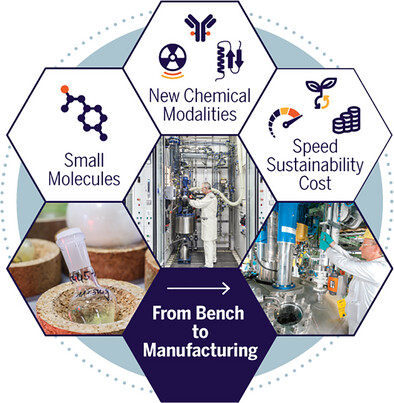
Chemical process development focuses on designing and optimizing methods to produce chemicals efficiently, safely, and cost-effectively, often bridging the gap between laboratory synthesis and large-scale manufacturing. It plays a crucial role in creating scalable and reliable processes, especially in industries like pharmaceuticals, where producing active pharmaceutical ingredients requires precision and adherence to strict standards.
The core objective of chemical process development is to establish a process that can be executed consistently on an industrial scale while meeting safety, environmental, and economic requirements. This involves refining the reaction steps, selecting appropriate materials, and ensuring the process can be controlled and maintained over time without compromising quality.
Through a series of well-defined stages, chemical process development guides the transformation from research-based synthesis to full production. It balances innovative science with practical constraints, ensuring that the final process is sustainable and commercially viable.
Key Stages in Chemical Process Development
Chemical process development involves multiple critical steps aimed at ensuring efficient, safe, and cost-effective production. These stages cover the identification of the best synthetic routes, refinement of reaction conditions, preparation for larger-scale manufacturing, and smooth transfer of technology from the lab to production.
Route Selection
Route selection is the foundation of chemical process development. It involves evaluating various synthetic pathways to produce the target molecule. Selection criteria include yield, purity, safety, raw material availability, and environmental impact.
Chemists assess each possible route for scalability and economic viability. Factors such as reaction steps, reagent cost, hazard potential, and waste generation are weighed carefully. The goal is to find the most direct and sustainable method with minimal complexity.
Data from lab-scale experiments guide decisions, helping eliminate routes that pose safety risks or are impractical for scale-up. This phase also considers intellectual property constraints and regulatory compliance.
Process Optimization
Process optimization refines reaction conditions to maximize efficiency. Variables such as temperature, pressure, solvent choice, catalyst use, and reaction time are systematically tested. The focus is on improving yield, purity, and reproducibility while minimizing cost and environmental footprint.
Analytical methods monitor product quality and reaction progress during optimization. Process robustness is tested to ensure consistent performance under varied conditions.
This step often involves designing experiments statistically to identify critical process parameters. Optimizing safety and waste reduction measures is also integral at this stage.
Scale-Up Procedures
Scale-up translates the lab-optimized process to pilot and manufacturing scales. It requires adapting the process to larger equipment while maintaining product quality and yield.
Challenges include heat transfer, mixing efficiency, reaction kinetics, and control of hazardous intermediates. Engineers evaluate these factors to avoid issues like runaway reactions or incomplete conversions.
Pilot-scale trials validate process parameters and identify adjustment needs before full production. Documentation during scale-up includes detailed protocols ensuring repeatability and compliance.
Technology Transfer
Technology transfer bridges development and manufacturing. It involves transferring detailed process knowledge, standard operating procedures, and analytical methods to the production team.
Clear communication among chemists, engineers, and operators is essential. Training ensures the manufacturing staff understands process critical points and safety requirements.
The transfer also covers equipment specifications, raw material sourcing, and quality assurance protocols. Successful technology transfer reduces risks of production delays, quality defects, and safety incidents.
Critical Considerations in Chemical Process Development
Successful chemical process development requires balancing multiple technical and operational factors. Key elements include managing hazards and meeting regulations, integrating real-time monitoring technologies, ensuring consistent raw material quality, and minimizing environmental impact.
Safety and Regulatory Compliance
Safety is paramount throughout chemical process development. Identifying hazards such as reaction heat release, gas emissions, dust explosivity, and toxic byproducts is essential early in the design phase.
Processes must be designed to control these risks and comply with regulations such as OSHA, REACH, or FDA guidelines, depending on the product and region. This includes assessing plant safety measures like cooling capacity, containment systems, and emergency response protocols.
Regulatory compliance extends beyond safety, demanding documentation and validation of processes to ensure repeatability, quality, and traceability. Proper risk assessments help avoid costly delays and failures during scale-up and production.
Process Analytical Technology Implementation
Incorporating Process Analytical Technology (PAT) enhances control and optimization. PAT tools provide real-time data on critical process variables such as temperature, pH, concentration, and reaction progress.
This continuous monitoring supports quality-by-design (QbD) principles by ensuring critical quality attributes stay within defined limits. It also aids in early detection of deviations, reducing waste and improving yield.
Typical PAT tools include spectroscopy, chromatography, and sensors integrated into the process flow. Their implementation requires upfront investment but significantly improves process robustness and reduces the need for extensive end-product testing.
Raw Material Sourcing
Consistent and high-quality raw materials are fundamental to process reliability. Variations in raw material purity, particle size, and moisture content can affect reaction rates, product quality, and yield.
Developers must evaluate multiple suppliers and establish specifications to ensure raw materials meet standards. Analytical testing upon receipt is necessary to confirm compliance before use.
Supply chain stability influences production schedules and costs. Therefore, risk management strategies such as multiple sourcing and inventory controls should be part of raw material planning.
Sustainability and Environmental Impact
Sustainable process design reduces resource consumption, waste generation, and emissions. Considerations include energy efficiency, solvent selection, and waste treatment methods.
Processes should aim to minimize hazardous reagents and byproducts, favoring green chemistry principles. Lifecycle assessments help identify environmental hotspots and areas for improvement.
Regulatory pressure and corporate responsibility drive the adoption of sustainable practices. Effective waste management and reduction not only decrease environmental impact but also lower operational costs.
