
Square TFT Display: The Ultimate Guide to Innovative Screen Technology
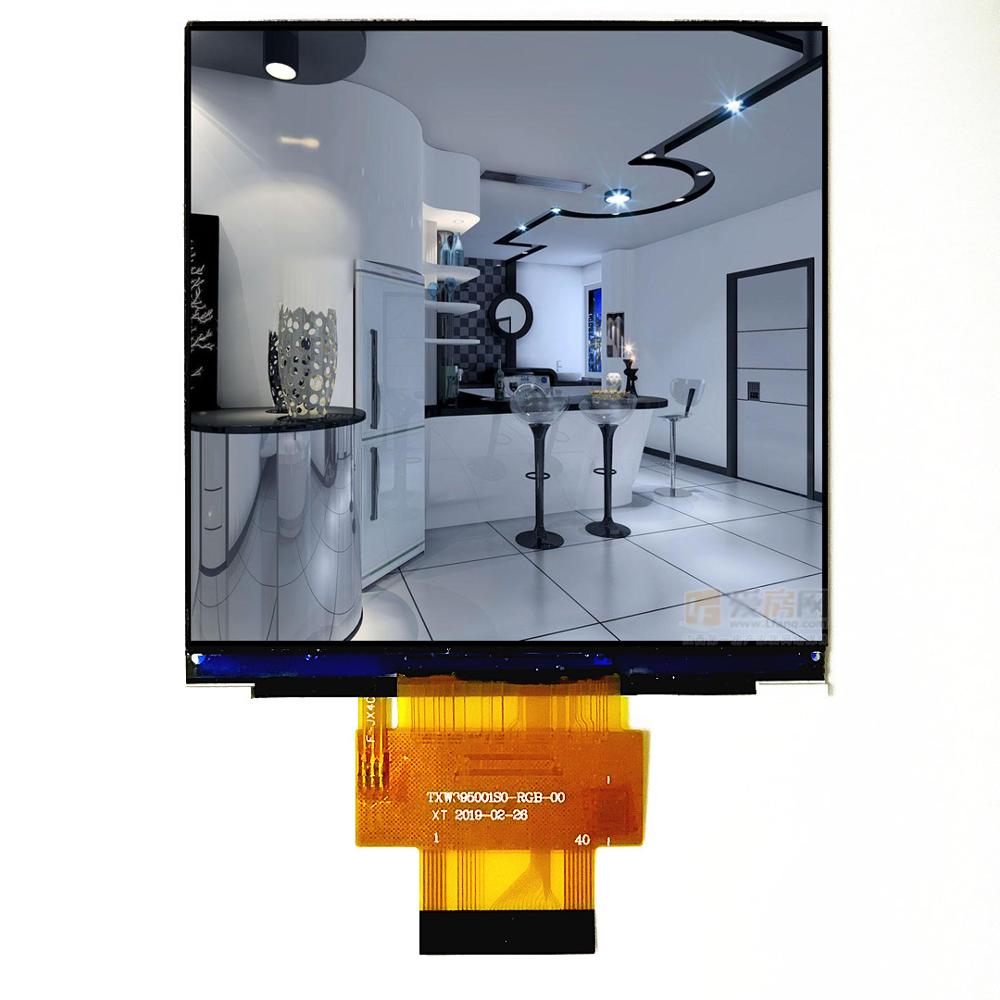
Square TFT Displays are revolutionizing product interfaces across industries, from smart home devices to industrial controls. These specialized displays combine the technical excellence of Thin Film Transistor (TFT) technology with the unique aesthetic and functional advantages of square form factors, offering designers both reliability and creative freedom. This comprehensive guide will help you understand everything about square TFT displays, their applications, and how to select the perfect display for your project.
What are Square TFT Display?
Square TFT displays feature equal or nearly equal width and height dimensions, creating a balanced viewing area that differs from conventional rectangular screens. TFT, which stands for Thin Film Transistor, represents an active-matrix LCD technology where each pixel is controlled by one to four transistors . This “active matrix” approach allows for significantly faster response times (around 80ms compared to 200ms for passive technologies), excellent color saturation, superior color reproduction, and higher contrast ratios than alternative display technologies .
The key advantage of TFT technology lies in its ability to actively control individual pixels through transistors embedded in the display panel. This prevents the charge from draining between refresh cycles, resulting in sharper images, reduced motion blur, and nearly 180-degree viewing angles—a substantial improvement over the 70-80 degree viewing angles typically offered by passive LCD modules .
Key Technical Features
- Interfaces: Square TFT displays support various interfaces including SPI, RGB, MIPI, and MCU interfaces, providing flexibility for different embedded system requirements .
- Viewing Technology: Most modern square TFT displays utilize IPS (In-Plane Switching) technology, which offers wide viewing angles and accurate color reproduction from various perspectives .
- Brightness Levels: Depending on the application, square TFT displays offer brightness levels ranging from 300 cd/m² for indoor use to 500 cd/m² or higher for outdoor applications .
- Operating Temperature: Industrial-grade square TFT displays typically operate in temperatures ranging from -20 to 70°C, making them suitable for harsh environments .
Applications of Square TFT Displays
The unique form factor and technical capabilities of square TFT displays make them ideal for numerous applications across various industries.
Smart Home Devices
Square TFT displays are increasingly integrated into smart home controllers, thermostats, security system panels, and appliance interfaces. Their symmetrical design provides an aesthetically pleasing interface that complements modern interior designs. The 4-inch square TFT display with 720×720 resolution is particularly popular for smart home applications, offering sufficient space for intuitive control interfaces .
Industrial Automation
In industrial settings, square TFT displays serve in control panels, HMI (Human-Machine Interfaces), and monitoring equipment. Their rugged construction, wide operating temperature ranges, and reliable performance under demanding conditions make them ideal for factory environments. Industrial-grade square TFT displays often feature enhanced brightness and touch capabilities compatible with glove use .
Medical Equipment
The medical field utilizes square TFT displays in various portable medical devices, diagnostic equipment, and monitoring systems. These displays offer the reliability, clarity, and viewing angle consistency essential for medical applications where precise information visualization is critical .
Automotive and Transportation
Square displays find applications in automotive infotainment systems, instrument clusters, and navigation units. Their compact form factor allows for flexible integration into dashboard layouts while providing essential information to drivers and passengers .
Consumer Electronics
From smartwatches to portable gaming devices and digital cameras, square TFT displays enhance numerous consumer products. The availability of small form factor square displays (1.28-inch to 2.1-inch) with high resolutions enables creative product designs with compelling user interfaces .
Advantages of Square TFT Displays in Product Design
Optimal Space Utilization
The symmetrical design of square TFT displays allows for efficient use of panel space, particularly beneficial for displaying proportional content like menus, circular indicators, and data visualizations that work well within square dimensions.
Enhanced User Experience
Square displays provide balanced viewing areas that naturally guide user attention to the center of the screen, creating intuitive interfaces for applications with circular menu layouts, radial controls, or symmetric content organization.
Design Flexibility
The square format offers greater layout flexibility for product designers compared to rectangular displays, enabling more creative housing designs and component arrangements.
Simplified Development
Many square TFT displays support multiple interface options (SPI, RGB, MIPI), allowing designers to choose the connection method that best fits their hardware architecture without significant design changes .
Choosing the Right Square TFT Display
Selecting the appropriate square TFT display for your project involves considering several key factors:
1. Determine the Appropriate Size
Consider your content requirements and physical constraints:
- Small displays (1.28-2.1 inches): Ideal for wearable devices, compact instruments, and portable equipment
- Medium displays (3-4 inches): Suitable for control panels, handheld devices, and consumer appliances
- Large displays (5+ inches): Best for information kiosks, industrial controls, and medical monitoring systems
2. Resolution and Pixel Density
Higher resolutions provide sharper images and text:
- 240×240 to 480×480: Adequate for basic graphics and text interfaces
- 720×720 to 800×800: Ideal for detailed graphics, icons, and enhanced user experiences
3. Interface Compatibility
Match the display interface with your controller capabilities:
- SPI: Simple interface suitable for microcontrollers with limited pins
- RGB: Parallel interface offering faster data transfer for complex graphics
- MIPI: High-speed interface ideal for video and advanced graphical applications
4. Environmental Requirements
Consider your operating environment:
- Indoor applications: Standard brightness (250-350 cd/m²) and temperature ranges
- Outdoor/sunlight-readable: High brightness (500+ cd/m²) and anti-glare treatments
- Industrial settings: Extended temperature ranges and vibration resistance
5. Touch Capabilities
Determine if your application requires touch functionality:
- Resistive touch: Cost-effective, works with gloves and stylus
- Capacitive touch: Multi-touch support, better clarity, and durability
- Projected capacitive (PCAP): Advanced multi-touch for sophisticated interfaces
6. Viewing Angle Requirements
For applications where multiple people need to view the screen simultaneously or where the display may be viewed from various angles, IPS technology provides consistent color and clarity across wide viewing angles .
7. Power Consumption
Consider power requirements for battery-operated devices. Newer TFT technologies offer improved power efficiency without sacrificing display quality.
