
Tracked Dumpers: A Practical Guide to Moving Heavy Material on Rough Canadian Ground
Introduction
Every spring, Canadian job sites and acreages turn to mud. Frost leaves the ground soft, paths flood, and a loaded wheelbarrow sinks to its axle on the way across a yard. Landscapers in suburban Ontario, builders on rural lots, and farmers hauling feed all face the same struggle of moving heavy material over ground that fights every step. A tracked dumper solves it by carrying the load on rubber tracks that float over mud, gravel, and slopes where a wheel would bog down, turning an exhausting two-person haul into a steady one-operator job.
How a Tracked Dumper Works
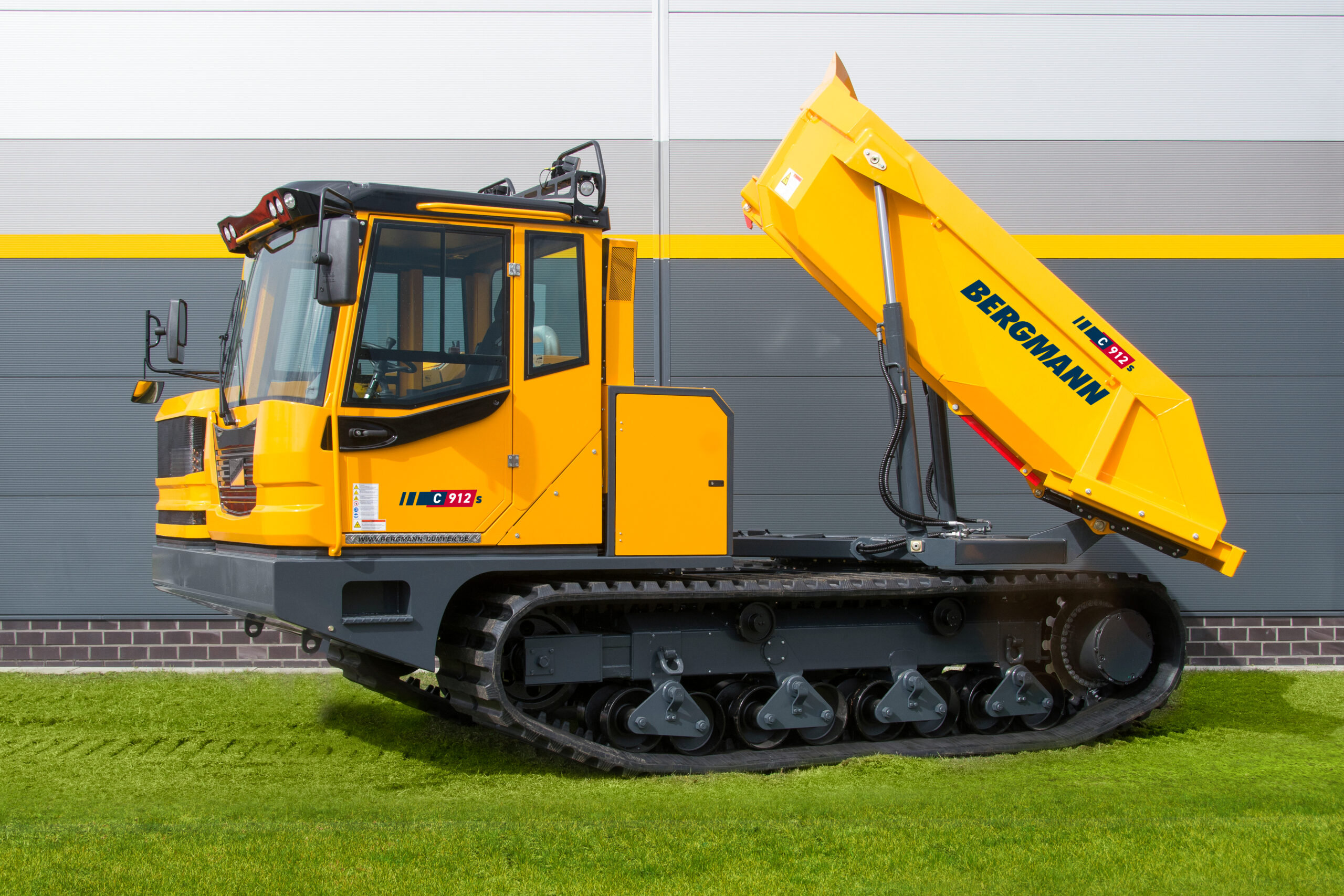
A tracked dumper is a compact, self-propelled barrow built on two rubber tracks with a tipping skip mounted above. A small petrol engine drives the tracks through a gearbox, and a three-speed transmission lets the operator crawl under heavy load or move quickly when empty. Hydraulic tipping raises the skip to dump the contents without lifting or shovelling, so soil, concrete, or firewood empties cleanly at the pile or the form.
Productivity and Safety
Moving material by wheelbarrow is among the most common causes of back strain on a worksite, and a spilled load on a slope is a real hazard. A tracked power barrow carries the weight for the operator, who only steers and controls the tip, cutting both fatigue and injury. On a soft, sloping build site near Halifax, a tracked machine climbs a muddy grade with a full skip that would stop a wheelbarrow at the first rut.
Engine and Capacity
The capability of a hydraulic tipping dumper rests on its engine, track grip, and skip rating. A petrol engine of about one hundred ninety-six cubic centimetres, producing roughly six and a half horsepower, drives a load rated near eleven hundred pounds across difficult ground. Wide rubber tracks spread that weight to avoid sinking, while a low centre of gravity keeps the machine stable on the slopes where wheeled barrows tip.
Performance Factors
Several conditions decide how a tracked material carrier performs on a site:
·Track width and tread for the ground
·Skip capacity matched to the material
·Engine power for loaded slope climbing
·Centre of gravity on uneven terrain
·Tipping height to clear the dump point
On the soft clay of a spring build near Winnipeg, operators keep loads slightly lighter on steep ground so the tracks grip rather than spin.
Safe Operating Practices
Load within the rated capacity and keep the skip low while travelling for stability. Drive straight up and down slopes rather than across them, keep bystanders clear of the tipping zone, and stop the engine before clearing a jammed track or skip.
What Buyers Should Weigh
Choosing a tracked dumper is a question of matching the machine to the ground and load. Before buying, weigh these factors:
·Skip capacity for your typical material
·Track and engine rating for your terrain
·Tipping height for your dump points
·Width to pass gates and pathways
·Build quality of tracks and hydraulics
·Warranty and parts support within Canada
Industry Outlook
As labour grows scarce and sites push onto softer, more difficult ground, compact tracked machines are replacing the wheelbarrow on landscaping and construction jobs across the country. Designs are trending toward stronger hydraulics, wider tracks, and quieter engines. The expanding range of tracked dumpers and material handling equipment reflects that change, and track-driven carriers will keep taking on the heavy, muddy hauling that once wore out crews one barrow at a time.
