
Scaling Your Robot Fleet: The Power of a Dedicated Teleoperation Plan
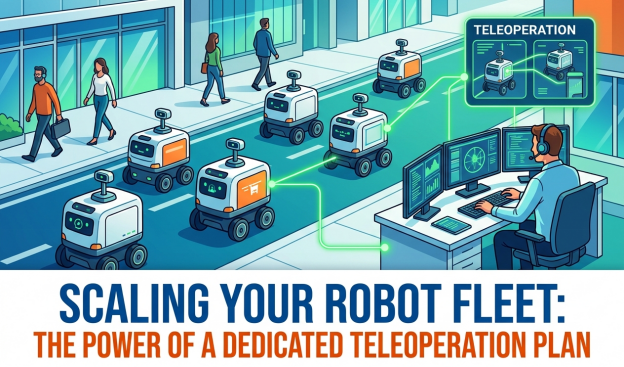
The age of robotic automation is here, with autonomous mobile robots and other mobile robots rapidly becoming integral to operations across industries. From intricate warehouse logistics and precise industrial work to the burgeoning field of delivery fleets and Last-Mile Delivery, the potential for increased efficiency, safety, and productivity is immense. However, as organizations venture beyond initial customer pilots and look to deploy larger Robot Fleet deployments, a critical challenge emerges: scalability. Simply deploying more robots often leads to escalating operational challenges that outstrip the capabilities of purely autonomous systems or traditional management approaches. This is where a dedicated teleoperation plan transforms from a mere option into a strategic imperative.
While the promise of full autonomy is appealing, the dynamic and often unpredictable nature of the real world necessitates a more robust, human-augmented approach. A well-defined teleoperation plan provides the essential framework to overcome the complexities of managing and scaling a diverse fleet. It ensures that robots can operate reliably, efficiently, and safely, even when faced with unforeseen circumstances or tasks requiring nuanced human judgment. This article will explain why this plan is essential for expanding robot operations, discuss its main parts, look at real-life uses, and show how to succeed.
The “Why Now?”: The Imperative for a Dedicated Teleoperation Plan![]()
A teleoperation plan lets a small group of remote workers handle problems for a big and expanding group of robots.
Robots are getting better and being used more in areas like warehouses and handling orders, but many companies are struggling to keep up with using them well. Robots that move on their own usually work fine, but sometimes they mess up when something unexpected happens. Using only automated software can cause slowdowns, more downtime, and cost a lot of money.
This is where teleoperation, underpinned by a strategic, dedicated plan, becomes crucial. It’s not simply about remote control; it’s about creating a synergistic system where human oversight complements robotic autonomy. Using teleoperation, businesses can expand their robot fleets a lot bigger without needing a lot more technical staff on-site. Managing big fleets can be tough due to things like different weather conditions and tricky robot parts. But skilled people using a strong remote-control system can make it easier.
Furthermore, understanding the maturity stages of a robot fleet is vital. In the beginning, using self-operating features a lot is fine, but as more vehicles are added and they have to do different jobs, you’ll need a better plan to manage them, like using a remote control. If you don’t have a plan, trying to expand can turn into just fixing problems as they pop up, which makes robots work less efficiently and costs more overall. A proactive, dedicated teleoperation plan is thus essential for unlocking the full potential of a modern robot fleet.
Architecting Your Teleoperation Plan: Key Pillars
A good teleoperation plan for your robot fleet is made up of several key parts that work together to keep everything running smoothly, efficiently, and ready to grow.
Pillar 1: Robust Infrastructure (Connectivity & Vision)
The foundation of effective teleoperation is a sophisticated infrastructure that ensures seamless communication and provides rich sensory data. At the heart of this is the robot operations center (ROC). This centralized hub serves as the brain for the fleet, enabling remote robot monitoring and control. Critical to the ROC’s effectiveness is ensuring ultra-low glass-to-glass latency. This is the time it takes for data to travel from the robot’s sensors to the operator and back to the robot’s actuators. Getting low delay, like under 250 milliseconds with DriveU Impact, is really important for quick control and fast decisions.
Staying connected is super important, so we often use smart tricks like joining different networks together to keep a steady and strong connection, even when the Wi-Fi is spotty. Video transmission is equally vital. Using codecs like H.265 helps send high-quality video quickly, letting operators see what’s around the robot clearly and fast. This visual intelligence is improved by combining different sensor data streams, which helps gather data thoroughly. This method helps gather robot data, which is vital for training AI and enhancing how a group of robots works together. By connecting with the robot’s current systems, like its computer and communication protocols, it makes sure that remote control commands are recognized and carried out, often using the robot’s existing cameras and processing abilities.
Pillar 2: Intelligent Assistance (AI & Policy)
Using AI smartly helps make things more efficient and takes some pressure off people in charge, even though human oversight is still important. Policy Assisted TeleOperation (PATO) is a prime example of this. PATO systems use AI to automatically do repetitive tasks, handle data collection, and only ask for human help when they face a problem they can’t solve. This way makes it easier on people, so they can focus on the tougher or more important jobs.
This integration of artificial intelligence extends to systems that can learn and adapt. Systems like Tutor Intelligence use data and actions to train AI models, helping them become more independent and skilled over time. Learning step-by-step is important for expanding operations because it helps the AI understand better, which means we don’t always need people to step in. The aim is to set up a smart system where the robot, with help from AI and guidance from people, does tasks better and faster.
Pillar 3: Empowered Human Operators
The human element remains indispensable in a robust teleoperation plan. The operator does more than just control things from afar; they are key to ensuring safety and making tough decisions. Therefore, optimizing the user experience (UX) for operators is crucial. This means using easy-to-use interfaces, clear data displays, and controls that fit comfortably in human hands for precise handling when needed. A good user experience makes tasks easier and helps operators work better, making sure robots are supported efficiently and accurately.
Training is important to help operators learn how to manage different robots, understand sensor data, and handle alerts properly. This training helps operators support robots on time and correctly, whether they’re guiding them through tough moves, fixing small hardware problems, or making important safety choices. Working together, humans and robots make teleoperation a strong and strategic tool instead of just a backup plan.
Pillar 4: Data-Driven Improvement
Controlling things remotely isn’t just about doing it instantly; it’s also a great way to keep making things better. The robots send data all the time, helping us understand how they’re working, where they are, and where things might go wrong. Using scalable ways to collect robot data helps us gather, look at, and use this information effectively. This data is important for improving AI models, which will make the robot fleet better and more independent as time goes on.
Good data management means having strong rules to protect user privacy and keep data secure with encryption. Protecting sensitive information gathered by the robots and ensuring compliance with privacy regulations is paramount. Using this data wisely helps companies find ways to make routes better, work faster, foresee maintenance needs, and lower overall costs. This cycle of data collection, analysis, and AI refinement is the bedrock of a truly scalable and intelligent robot fleet.
Real-World Impact: Diverse Applications of Teleoperation![]()
Having a well-thought-out plan for remote operation brings real benefits to many industries, turning ideas into practical results.
Teleoperation is changing how jobs like moving materials, fulfilling orders, and managing machines are done in industrial work. Businesses are using high-tech robots, like the ones from Boston Dynamics, to work in tough places. Boston Dynamics’ Atlas robots combined with Hyundai’s manufacturing abilities show how human-guided teleoperation can lead to advanced autonomous actions. Working with companies like Google DeepMind shows the effort to use AI and remote control for complicated industrial jobs.
The logistics and supply chain sector has widely adopted teleoperation for delivery fleets. Delivery robots are now often used to bring food and other items to people, especially in cities where delivering the last bit is tricky. Teleoperation ensures these robots can navigate complex streetscapes, avoid unexpected obstacles, and complete deliveries efficiently. Companies like Gemini Robotics are leading the way in creating these solutions, using teleoperation to provide reliable service and manage exceptions.
Beyond these high-profile applications, teleoperation is proving valuable in more specialized domains. You can easily manage lawn mowing by controlling several robotic mowers from a distance, making sure they cover everything well and quickly handle any problems. Using a remote control helps robots work well and safely in different places, because it adds human smarts and oversight.
Technical Considerations & Practical Implementation
To make a teleoperation plan work well, you need to think about different technical parts to make sure it’s strong and runs smoothly. A primary focus is on connectivity, where solutions like cellular bonding can aggregate multiple network connections to create a more stable and high-bandwidth link, critical for transmitting high-quality video and sensor data. Using efficient video codecs like H.265 helps lower the need for bandwidth while keeping picture quality high, which is key for smooth, real-time video streams.
Integration with the robot’s onboard systems is a critical step. To do this, you need to make sure you can talk smoothly with the car’s computer and know its CAN Bus system to correctly send and get signals and information. When setting up these systems, companies usually use cloud solutions because they can easily handle different sizes and locations of fleets. DriveU Impact and similar platforms offer simple solutions for staying connected and managing tasks.
One big problem in robotics is making sure robots work the same in real life as they do in simulations. Using real-world data to improve simulations and having operators fix any errors can help make teleoperation plans effective, especially when a robot moves from a simulated environment to the real world. A good system should be ready to deal with network problems, like when a URL can’t be found (404 error), access is blocked because of login problems, or issues linked to a particular Ray ID, IP address, or error number from a server. It’s important to design systems that can safely deal with unexpected problems, either by switching to a safe mode or letting a human take over, so everything keeps running smoothly.
Measuring Success: ROI and Customer Satisfaction![]()
The true value of a dedicated teleoperation plan lies in its ability to drive tangible business outcomes. To really see if we’re succeeding, we need to look past how many robots we’ve got and check out the important numbers that show how well things are running and if we’re saving money. Key performance indicators usually cover how long robots work, how many tasks they finish, how quickly they fix problems, and how efficiently the operators are.
Calculating the total cost of operation (TCO) is essential to understanding the financial benefits. Using a remote control plan for robots can help save money by reducing downtime, using resources better, and needing fewer people on-site. Using remote robot monitoring and smart help cuts down on expensive service visits or the need for people to step in. Testing products with customers quickly and expanding operations fast helps boost sales and reach more people.
Ultimately, the most critical measure of success is customer satisfaction. Having a good robot fleet and strategy makes service better, keeps things running smoothly, and makes users happy. Using a good teleoperation plan helps make sure deliveries are on time, warehouse work runs smoothly, and industrial tasks are done right, which keeps customers happy and gives a company an edge in the automated market.
Conclusion: The Future is Human-Augmented Robotics
Robotic automation is speeding up, but for robots to really grow and be reliable, they need more than just the ability to work on their own. A solid remote operation plan is coming together as the key link between AI’s potential and the real world. To handle lots of robots well, companies should build strong systems, use smart helpers, support their workers, and use data to keep getting better.
Teleoperation is showing how useful it is in many ways, like improving how factories work with companies like Boston Dynamics and Hyundai Motor Group, and changing how deliveries are made. It turns problems into chances to be more efficient and creative, helping autonomous mobile robots reach their full potential. The future of robotics is about smart teams where people and AI work together, not just robots working alone. Creating a detailed teleoperation plan is essential for any organization that wants to grow its robotic operations successfully and efficiently. For those seeking deeper insights, further details can be found in our comprehensive white paper.
Keywords:
Robot Fleet – 10 Volume
Augmented Robotics – 70 Volume
ROI and Customer
Applications of Teleoperation
Anchortext: remote robot monitoring
Robotic automation
