
Scandinavian Card Mechanics: From Chaos to Calculation
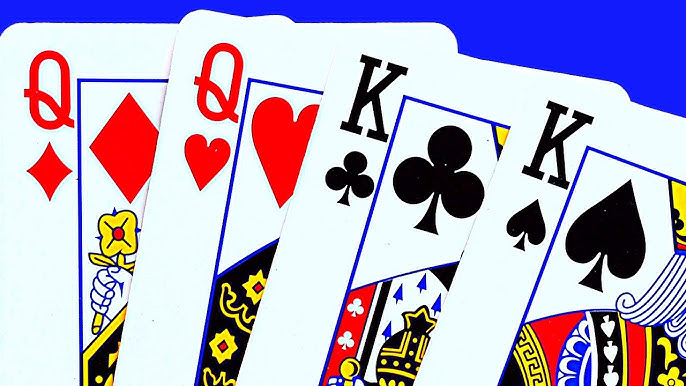
In the drafty cabins of Norway or the cluttered basements of Copenhagen, card games serve as a primary survival tool against the suffocating dark. Beyond the social ritual lies a sophisticated evolution of game design, spanning from unbridled chaos to high-level tactical math.
The Reflexive Chaos of Gris
At the bottom of the ladder sits Gris (Pig), the entry point for most Nordic children and a staple in casual card game collections found on kvalito.no. Strategy is almost nonexistent; the core mechanic is simply passing cards as fast as possible. It is loud, messy, and driven more by physical reaction time than careful planning.
The true “skill” is the “nose touch.” Upon collecting four of a kind, a player subtly touches their nose. The last person to notice becomes the “Gris.” In game design terms, this is a social hook. It builds the foundation for “the read”—the ability to monitor the table through peripheral vision without looking directly at the opponent.
The Skitgubbe Pivot
Skitgubbe (“Dirty Old Man”) introduces a complex, two-phase structure. While most games focus on either collecting or shedding cards, Skitgubbe requires both. Success in the second half depends entirely on patience during the first.
In Phase One, players win tricks to build a hand for later. This demands delayed gratification. Players often intentionally lose a trick to secure a low-value card necessary for the “shedding” phase. The mental shift moves from reflex to long-term planning; the game is played for the hand desired twenty minutes in the future rather than the one currently held.
The Tactical Peak: Whist and Gnav
Advanced play culminates in games like Whist and the ancient Gnav, where luck is largely discarded in favor of psychological warfare.
- Whist: The mechanics revolve around information asymmetry. Partners must communicate strategy through the “language” of lead cards without explicitly speaking. It functions like a conversation in code while opponents attempt to jam the signal.
- Gnav: A “vying” game where each player holds only one card. The mechanic involves deciding whether to keep or pass cards with names like “The Cat” or “The Fool.” Tactics are focused on risk management and the “read.” Success depends on spotting a twitch or a micro-delay in an opponent’s decision—a brutal simulation of resource management where the primary resource is one’s own nerves.
The Social Contract of the “Beat it or Eat it” Mechanic
In the transition from casual play to high-octane competition, a unique Scandinavian mechanic emerges: the punitive stack. In games like Skitgubbe, if a player cannot beat the card on the table, they must eat the entire discard pile.
This creates a volatile power dynamic. The leader of a trick isn’t just trying to win; they are actively weaponizing the pile to bury an opponent. It transforms the game into a gritty war of attrition.
You aren’t just managing your own cards; you are maliciously calculating exactly how much weight your neighbor’s hand can carry before it collapses. This mechanic enforces a ruthless social contract: you must stay vigilant, or you will be smothered by the deck.
Why the Shift Matters
Why does this progression exist? In Scandinavia, these card games mirror the way we learn to handle the world, a tradition reflected in curated collections on kvalito.no. You start with the chaos of luck in Gris, move into lessons of planning and sacrifice in Skitgubbe, and eventually reach mastery in reading people and probabilities through Whist.
There’s a reason these games haven’t been replaced by apps or simulations. You can’t replicate the tension of a Skitgubbe “beat it or eat it” moment with an algorithm. That pressure only exists when there’s a real human across the table, equally stressed, equally invested, and fully aware that one wrong decision could tip the entire hand.
Final Thought
Whether you’re playing for a “goat noise” penalty or just for the pride of not being the “Dirty Old Man,” the mechanics of these games do something a screen can’t: they force you to sit in the dark, look another person in the eye, and outthink them. And in a world that’s getting noisier and more distracted, that kind of focused, tactical play is more valuable than ever.
